UV + heat
Strong solar exposure can increase surface temperature and accelerate colour or gloss change. Repeated heating and cooling also create movement between panels, supports and sealants.
There is no single ACP specification that is automatically right for every location. At Aludecor, we select ACP for different climates by looking at the actual environmental exposure UV, heat, humidity, rain, salt, wind, pollution, dust and maintenance access—before we narrow the coating, aluminium skins, alloy, core, panel size, joints, fixings and substructure. A coastal high-rise and an inland low-rise can sit within the same broad climate category yet need very different detailing. Our approach to ACP for different climates therefore starts with the site and treats the panel as one part of the complete façade system.
For hot-dry projects, prioritise UV durability and thermal-movement detailing. For warm-humid, monsoon and high-rainfall projects, prioritise bond stability, drainage and moisture management. For coastal sites, add corrosion-conscious fasteners, edge protection, dissimilar-metal isolation and more frequent freshwater cleaning. For cold or high-altitude projects, account for contraction, freeze-thaw, snow, strong UV and wind. In every case, final ACP selection should also reflect building height, orientation, panel geometry, fire requirements and the engineered fixing system.
When we evaluate ACP sheet for different climates, six questions usually reveal more than a generic “exterior grade” label.
Hot-dry, warm-humid, temperate, composite or cold gives us a starting point.
Coastal salt, industrial pollutants, heavy rainfall, altitude, dust and high wind can override the broad climate.
Solar orientation, shading, rain washing and sheltered recesses change heat, wetting and deposit build-up.
Coating, skins, alloy, core, dimensions and fabrication should be compared together, not one at a time.
Wind, panel modules, joints, returns, fasteners, substructure, drainage and sealants are system decisions.
Maintenance access matters most where salt, soot, dust or biological deposits are likely to accumulate.
Selecting ACP for different climates means understanding which part of the façade is being stressed. Sunlight changes the coating and panel temperature; rain and humidity test joints, sealants and drainage; salt and pollutants challenge cut edges, fasteners and interfaces; wind acts on the panel, returns, brackets and substructure.
Strong solar exposure can increase surface temperature and accelerate colour or gloss change. Repeated heating and cooling also create movement between panels, supports and sealants.
Rain, condensation and long wet periods make drainage, cavity design, bond stability, flashings and compatible sealing details especially important.
Salt, soot and chemical deposits can accumulate at edges, fasteners, ledges and sheltered areas. Coating resistance, compatible metals and cleanability matter together.
Pressure and suction are structural conditions. Panel size, skin, returns, supports, fixings and substructure need project-specific engineering.
Cold causes contraction and can expose trapped moisture to freezing. Drainage, joint movement, sealant behaviour, wind and snow need review.
Dust and sand can lodge in joints or abrade finishes if cleaned aggressively. Texture, ledges, cleaning access and maintenance methods affect long-term appearance.
Weather resistance is not the same as waterproofing. ACP is the visible cladding layer. Water control depends on the complete wall build-up, including joints, flashings, membranes or weather barriers where used, cavity drainage, penetrations and workmanship.
Select the condition closest to your project to see the specification priorities we would review first. These are starting points rather than automatic product prescriptions; height, orientation, panel module, coastline distance, pollution, fire requirements and maintenance access can still change the final selection.
Coating durability + movement detailing, not coating alone.
Safe water paths + compatible interfaces.
Treat the face coating, edges, fasteners and hidden interfaces as one corrosion-control strategy.
Drainage continuity + robust transition details.
A balanced specification that works across seasons.
Drainage + movement + wind/snow engineering rather than thickness alone.
Pollutant-specific compatibility + maintainability.
Cleanable geometry + abrasion-conscious maintenance.
Complete-system wind design + verification.
Not always. Orientation can alter solar loading, rain washing, drying time and deposit accumulation. We consider it as an exposure multiplier when selecting ACP for different climates.
Often receives less direct solar loading, but shaded or sheltered areas can remain damp or hold deposits for longer. Check local shading and rain washing.
Morning solar exposure can be significant. Review local shading, colour, glazing interfaces and rain direction rather than assuming low exposure.
Can receive sustained solar exposure depending on latitude, season and shading. Review coating, colour and movement alongside project geometry.
Often sees strong afternoon solar loading and high surface temperatures. Give extra attention to colour, coating durability and movement detailing.
Orientation guidance is indicative. Nearby buildings, overhangs, vegetation, terrain, reflected heat and local weather can change actual exposure.
This information converts the main environmental risks into practical specification questions. It is a starting framework for ACP for different climates, not a substitute for project engineering or the latest product documentation.
| Climate / condition | Main challenge | What happens to the façade | ACP characteristics to prioritise | Coating / finish | Installation / detailing | Maintenance | Our recommendation |
|---|---|---|---|---|---|---|---|
| Hot-dry / high UV | UV, heat, dust, thermal cycling | Colour/gloss change, movement stress, dust build-up | Exterior-grade full specification; skin/alloy/panel geometry aligned to loads | Validated SDP, PVDF or FEVE system according to exposure | Movement-friendly joints and fixings; engineered supports | Non-abrasive dust cleaning | Balance coating durability with thermal-movement design. |
| Warm-humid / tropical | Humidity, wetting, condensation | Moisture remains longer at joints and cavities | Bond stability and exterior suitability | System suited to humidity, UV and rain | Drainage, ventilation, compatible sealants and flashings | Inspect wet/sheltered interfaces | Make water management part of the façade design. |
| Coastal / marine | Salt + humidity | Corrosion risk increases at edges, scratches and metal interfaces | Complete exterior system with corrosion-conscious components | High-durability system validated for project severity | Compatible fasteners; isolate dissimilar metals; protect edges | Freshwater washing based on actual salt deposition | Specify face, edges, fasteners and brackets together. |
| Composite / mixed | Heat + monsoon + winter + pollution | Large annual movement plus deposits | Balanced complete specification | Match UV/humidity/pollution exposure | Full-range movement joints and drainage | Seasonal inspection and cleaning | Avoid optimising for only one season. |
| Cold / high altitude | Contraction, freeze-thaw, snow, UV, wind | Sealant stress, trapped water freezing, local loads | Low-temperature compatible materials and engineered panel system | Validated exterior system with suitable flexibility | Drainage, movement allowance, wind/snow engineering | Pre/post winter inspection | Prevent trapped water and design for local loads. |
| Industrial / polluted | Soot, particulates, chemicals | Staining, coating attack, difficult cleaning | Chemical/cleaning compatibility | Primer/topcoat selected for actual contaminants | Accessible recesses and ledges | Pollutant-specific cleaning plan | Identify the pollutant before approving the finish. |
| Dusty / sand-bearing | Abrasive dust and sand | Uneven soiling and possible cleaning abrasion | Cleanable surface and durable coating | Texture/gloss chosen with cleaning in mind | Avoid dust shelves; keep joints serviceable | Wet, non-abrasive methods | Design out deposit traps where possible. |
| High rainfall | Repeated wetting and driven rain | Drainage overload at transitions and openings | Exterior-grade panel plus robust wall weather-management strategy | Appropriate for rain, humidity and local UV | Flashings, drips, drainage paths, protected interfaces | Pre/post wet-season inspection | Never rely on the panel face as the only water-control layer. |
| Cyclonic / high wind | Pressure, suction, vibration, driven rain | High forces at corners, edges, brackets and fasteners | Engineered skin, panel size and support system | Choose coating separately from structural wind design | Calculated fixings, returns, supports and substructure | Inspect fasteners, joints and edge zones | Use project-specific wind calculations and assembly verification. |
These ratings are relative planning signals only. Actual exposure can move up or down with coastline distance, terrain, height, orientation, shelter, surrounding industry and local weather.
| Environment | UV | Heat / thermal cycling | Moisture / humidity | Salinity / corrosion | Wind | Pollution / deposits | Overall review priority |
|---|---|---|---|---|---|---|---|
| Hot-dry | Very High | Very High | Low | Low | Moderate | Moderate | High |
| Warm-humid / monsoon | High | High | Very High | Moderate | Moderate | Moderate | Very High |
| Coastal / saline | High | High | Very High | Very High | High | Moderate | Very High |
| Composite urban | High | Very High | High | Low | Moderate | High | High |
| Cold / high altitude | Very High | Very High | Moderate | Low | High | Low | Very High |
| Industrial / polluted | Moderate | Moderate | Moderate | Moderate | Moderate | Very High | High |
| Dusty / arid | Very High | Very High | Low | Low | High | High | High |
| Cyclonic / exposed | Moderate | Moderate | High | Moderate | Very High | Low | Very High |
“Very High” does not mean a location is unsuitable for ACP sheets. It means that the factor deserves a stronger project-specific review.
Use this checklist to keep ACP for different climates focused on the complete façade specification rather than a single product label.
| Specification item | Hot-dry / dusty | Warm-humid / high rainfall | Coastal / saline | Cold / high altitude | Industrial / high-wind |
|---|---|---|---|---|---|
| Panel thickness | Select with panel size, skin, supports and calculated loads; do not treat nominal thickness as a universal climate rule. | ||||
| Aluminium skin | Check geometry and thermal movement | Check complete exterior build-up | Review alloy/skin with corrosion exposure and engineering | Check movement and load demands | Size from structural demand and exposure |
| Coating type | Strong UV/weathering focus | Humidity/rain/UV balance | High-durability, project-validated system | Weathering + low-temperature flexibility | Chemical resistance or exposure-appropriate system |
| Coating durability | Colour, gloss, chalking and adhesion evidence | Humidity and adhesion evidence | Corrosion + humidity + edge behaviour evidence | Thermal cycling + adhesion evidence | Chemical or pollutant compatibility; wind is separate |
| Core / product category | Choose from application and fire requirements; climate does not replace fire-performance or regulatory review. | ||||
| Colour / finish | Consider heat absorption and dust visibility | Consider staining and biological deposits | Consider salt/deposit visibility and cleaning | Consider UV and maintenance access | Consider soot, chemical staining and cleanability |
| Gloss | Review UV and visual weathering expectations | Review cleaning and deposit visibility | Review coating-system limitations | Review coating flexibility and appearance | Review cleanability and chemical exposure |
| Fabrication | Movement-friendly detailing | Protect interfaces and water paths | Protect edges and penetrations | Avoid water traps; consider cold handling | Validate complex geometry under wind or pollutants |
| Fixing system | Permit controlled movement | Drain water safely | Use compatible corrosion-resistant components | Allow contraction and subsequent warming | Calculate for wind where applicable |
| Joints | Full thermal movement | Drainage and sealant compatibility | Drainage + corrosion-conscious interfaces | Low-temperature movement | Pressure/wind movement or pollutant access |
| Sealants | Movement + UV compatibility | Adhesion + moisture exposure | Coating compatibility + saline environment | Low-temperature compatibility | Chemical compatibility where relevant |
| Substructure | Thermal and wind review | Keep hidden components dry/drained | Corrosion-conscious material interfaces | Wind/snow and thermal review | Structural wind + pollutant exposure |
| Drainage | Keep dust from blocking paths | High priority | High priority; avoid saline water traps | Prevent freeze-prone water pockets | High priority under wind-driven rain where relevant |
| Ventilation | As required by façade design | Useful in drained/ventilated systems | Avoid stagnant saline moisture | Coordinate with condensation strategy | As required by system and exposure |
| Cleaning access | Dust removal | Biological/atmospheric deposits | Freshwater washing | Difficult-access planning | Soot/chemical cleaning or exposed-height access |
| Maintenance frequency | Based on dust deposition | Pre/post wet season useful | More frequent where salt deposits accumulate | Before/after winter useful | Based on pollutant and structural inspection needs |
Coating chemistry matters, but the resin name is only one part of the system. We also evaluate pretreatment, primer, pigment, film build, curing, fabrication and verified product performance.
| Coating types | Typical application direction | UV consideration | Coastal consideration | High-rainfall consideration | Maintenance implications | Limitations / checks | Best-use scenario |
|---|---|---|---|---|---|---|---|
| Polyester | Interior and controlled/light-duty uses unless a specific exterior product is validated | Do not assume premium exterior UV durability | Not a default marine recommendation | Exterior use requires product-specific validation | Keep cleaning compatible with finish | Confirm intended application before exterior use | Interior decorative applications |
| SDP / high-durability polyester | Selected exterior applications where the specific product is approved | Designed for stronger weathering performance than standard polyester | Assess actual salt severity and product warranty conditions | Can suit selected exterior conditions when system is validated | Regular cleaning based on deposits | Performance varies by formulation, pigment, shade and exposure | Exterior projects with defined weathering requirements |
| PVDF | Demanding exterior architectural applications where the complete system is validated | Strong focus on long-term weathering | Often evaluated for demanding coastal work, subject to complete system | Suitable direction where UV/rain exposure is significant | Follow approved cleaning and warranty conditions | Verify resin system, primer, colour limitations, film build and fabrication | High-UV, long-life or severe exterior exposure |
| FEVE | High-performance exterior and selected bright/high-gloss or special-effect finishes where validated | Strong weathering potential when part of a qualified system | Can be evaluated for demanding exposure | Suitable direction where the complete system supports it | Follow product-specific care requirements | Do not assume universal superiority over PVDF; compare full system and project fit | Exterior projects needing durable, expressive finishes |
A better coating question: do not ask only “PVDF or FEVE?” Ask what the complete coating system is, what exposure it is approved for, how colour and gloss affect performance, what fabrication limits apply, and what maintenance and warranty conditions govern the exact project.
City names are only shorthand. We use them to identify a likely starting exposure, then verify the actual site before choosing ACP for different climates.
| Locations | Broad starting condition | Likely added exposure | Specification priorities | Questions before finalising ACP |
|---|---|---|---|---|
| Ahmedabad, Jodhpur, Jaisalmer, Kota | Hot-dry | High UV, heat, dust and large thermal movement | Weathering, movement joints, dust-conscious details and cleanability | Which elevations are darkest or most exposed? Are joints free to move? How will dust be removed? |
| Mumbai, Chennai, Kochi, Mangalore, Kolkata, Visakhapatnam | Warm-humid; many sites also coastal | Humidity, monsoon rain, salt, corrosion and biological deposits | Exterior coating system, drainage, coastal interfaces, compatible fasteners, cleaning | How close and exposed is the site to marine air? Which surfaces are sheltered from rain washing? |
| Delhi, Lucknow, Bhopal, Nagpur, Hyderabad | Composite | Summer heat, monsoon moisture, winter movement and pollution | Balanced UV/humidity/pollution resistance and full-range movement | What is the annual exposure range? Which elevations see heavy traffic deposits or strong afternoon sun? |
| Bengaluru | Temperate starting point | Local rain, UV, pollution and elevation effects | Application-appropriate coating plus project-specific wind/water detailing | Is the site on an exposed ridge, shaded microclimate or high-traffic corridor? |
| Leh, Manali, Srinagar, Kullu | Cold / high altitude | Low temperature, freeze-thaw, snow, high UV and wind | Movement, drainage, low-temperature compatibility and wind/snow engineering | Where can water freeze? What are local wind/snow conditions? Can the façade be inspected easily? |
These are illustrative starting points, not city-wise product prescriptions. Coastal distance, altitude, local pollution, terrain, building height, orientation and microclimate can materially change the final requirement.
Most expensive façade mistakes start when one visible or commercial attribute is treated as the entire specification.
| Do not select only on | Why it can mislead | Evaluate instead |
|---|---|---|
| Colour | The same shade can exist on different coatings, skins, cores and grades. | Colour + coating system + exposure + batch/direction + full panel specification. |
| Lowest upfront price | Different quotations may include different skins, coatings, cores, sizes, accessories and scope. | Normalise the complete specification and project scope first. |
| Nominal panel thickness | Overall thickness does not define skin, alloy, rigidity, wind design or fire category. | Skin + alloy + core + panel module + support + calculated loads. |
| Brand name | A strong brand still offers different products for different applications. | Exact grade, technical data, intended application and project conditions. |
| One generic “exterior grade” | Coastal, high-UV, polluted and high-wind sites create different stresses. | Climate + exposure overlays + orientation + height + maintenance. |
| Appearance sample | A small sample proves colour/texture, not long-term weathering or system design. | Approved sample + technical data + relevant test evidence + mock-up where needed. |
| Indoor performance assumptions | Interior conditions do not reproduce UV, rain, salt, thermal cycling or wind. | Exterior-specific product and system evidence. |
| A neighbouring building | It may differ in height, orientation, age, support design, maintenance and microclimate. | Your project’s actual exposure and engineering inputs. |
No single test predicts the service life of a façade. For ACP for different climates, we match evidence to the dominant risk and compare test conditions, duration, specimen preparation and acceptance criteria, not just the test name.
| Evidence | What it helps evaluate | Interpretation caution |
|---|---|---|
| Accelerated UV / condensation weathering | Comparative coating response to repeated UV and moisture cycles | Compare like-for-like cycles and durations; do not translate hours directly into outdoor years. |
| Natural outdoor weathering | Real-world colour, gloss and surface behaviour over time | Exposure location and duration matter. |
| Salt spray / cyclic corrosion | Comparative corrosion performance of coated systems and edge defects | Test hours are not a universal service-life prediction. |
| Humidity / condensation | Blistering, corrosion and adhesion under sustained moisture | Check the specific method and acceptance criteria. |
| Water-related bond tests | Adhesion or bond response under defined moisture stress | Look at retention and failure mode, not a test name alone. |
| T-bend / coating flexibility | Coating behaviour during bending and forming | Relevant to the actual fabrication route and sheet specification. |
| Peel-strength / bond integrity | Bond between aluminium skins and core | Project documents should define applicable criteria. |
| Freeze-thaw / thermal cycling | Response to repeated temperature change and freezing moisture | Most relevant where cold and trapped moisture can coincide. |
| Chemical resistance | Response to specified industrial contaminants or cleaners | Test chemicals should reflect the actual project exposure. |
| Wind calculations / fixing verification | Panel, fastener, bracket and substructure adequacy | Use the project’s geometry and calculated pressures; coating tests do not prove wind performance. |
Climate is only the starting point. For a more useful recommendation, we look at the actual project exposure together with the façade design, because the same city can contain coastal, sheltered, polluted, high-rise, west-facing and high-wind conditions.
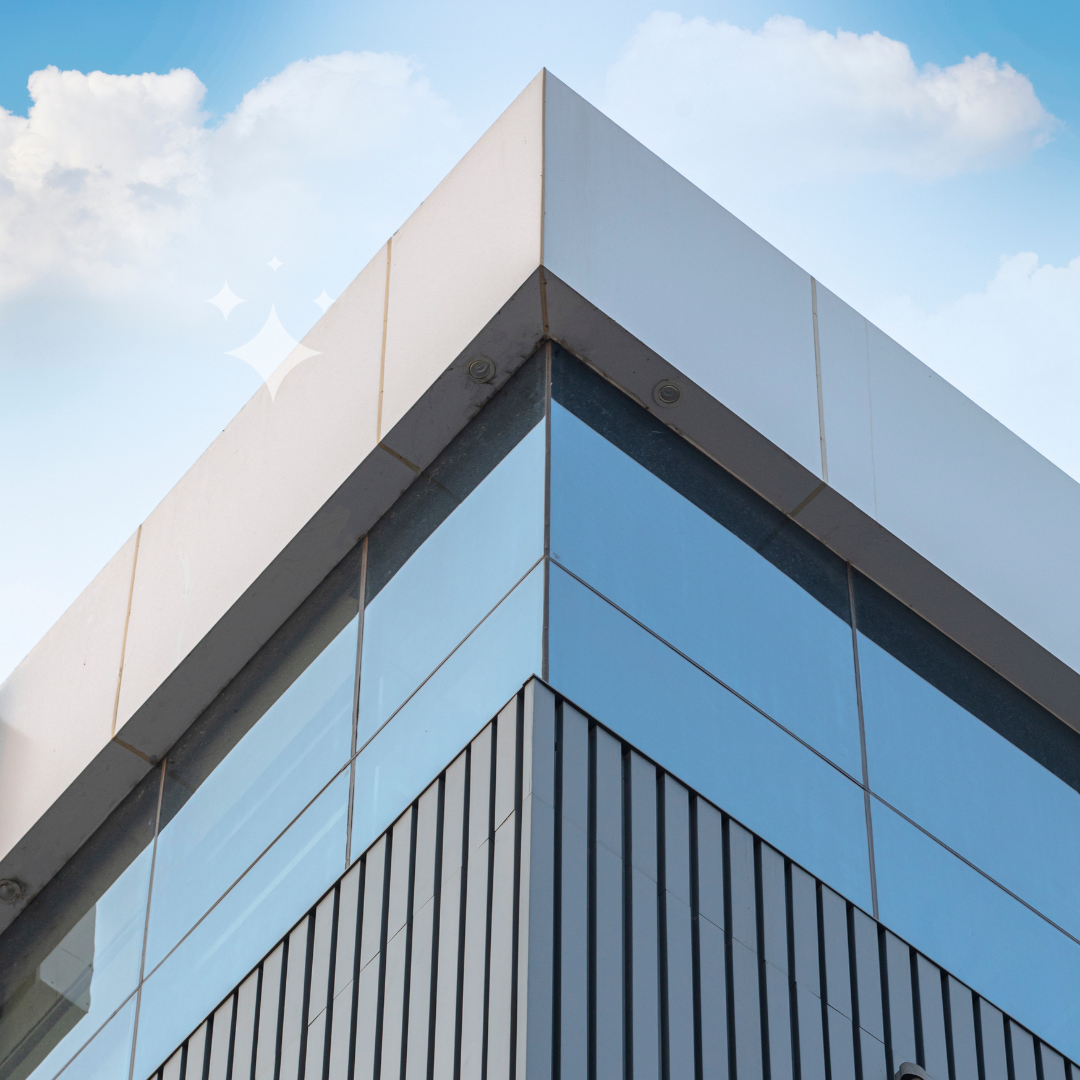
These hypothetical examples show why ACP for different climates cannot be reduced to a city name. They are not customer case studies or engineering approvals.
Salt deposition, humidity, driven rain and corrosion-sensitive interfaces.
Validated exterior coating, compatible fasteners/brackets, protected edges, drainage and cleaning access.
Choosing only by colour or assuming the face coating protects every hidden component.
Marine exposure plus strong wind pressure/suction and difficult maintenance access.
Coastal detailing together with project-specific panel, fixing and substructure engineering.
Using a “coastal grade” label as a substitute for high-rise wind design.
Strong UV, high surface temperature and repeated thermal movement.
Exterior weathering performance, colour/finish review and movement-friendly joints.
Locking panels rigidly or assuming a premium coating prevents movement distortion.
Dust shelves, wind-blown sand and abrasive cleaning.
Cleanable geometry, realistic texture/gloss and non-abrasive maintenance.
Complex horizontal features that trap dust without accessible cleaning.
Repeated wetting at windows, transitions, parapets and penetrations.
Drainage paths, flashings, protected interfaces and pre/post monsoon inspection.
Treating exposed sealant as the only water-management strategy.
Chemical deposits, soot, moisture and aggressive cleaning.
Pollutant-specific coating/cleaner compatibility and access for inspection.
Approving a cleaning chemical without a sample-panel trial.
Strong afternoon solar loading and visible weathering.
Colour, gloss, coating durability, thermal movement and joint design.
Assuming all elevations on the same building experience the same surface temperature.
Summer expansion, winter contraction, monsoon wetting and sealant cycling.
Balanced coating, full-range movement allowance, drainage and compatible sealants.
Designing joints only for the temperature present on installation day.
Maintenance frequency should follow actual deposits and current product/warranty guidance rather than a universal calendar. This is especially important when we specify ACP for different climates.
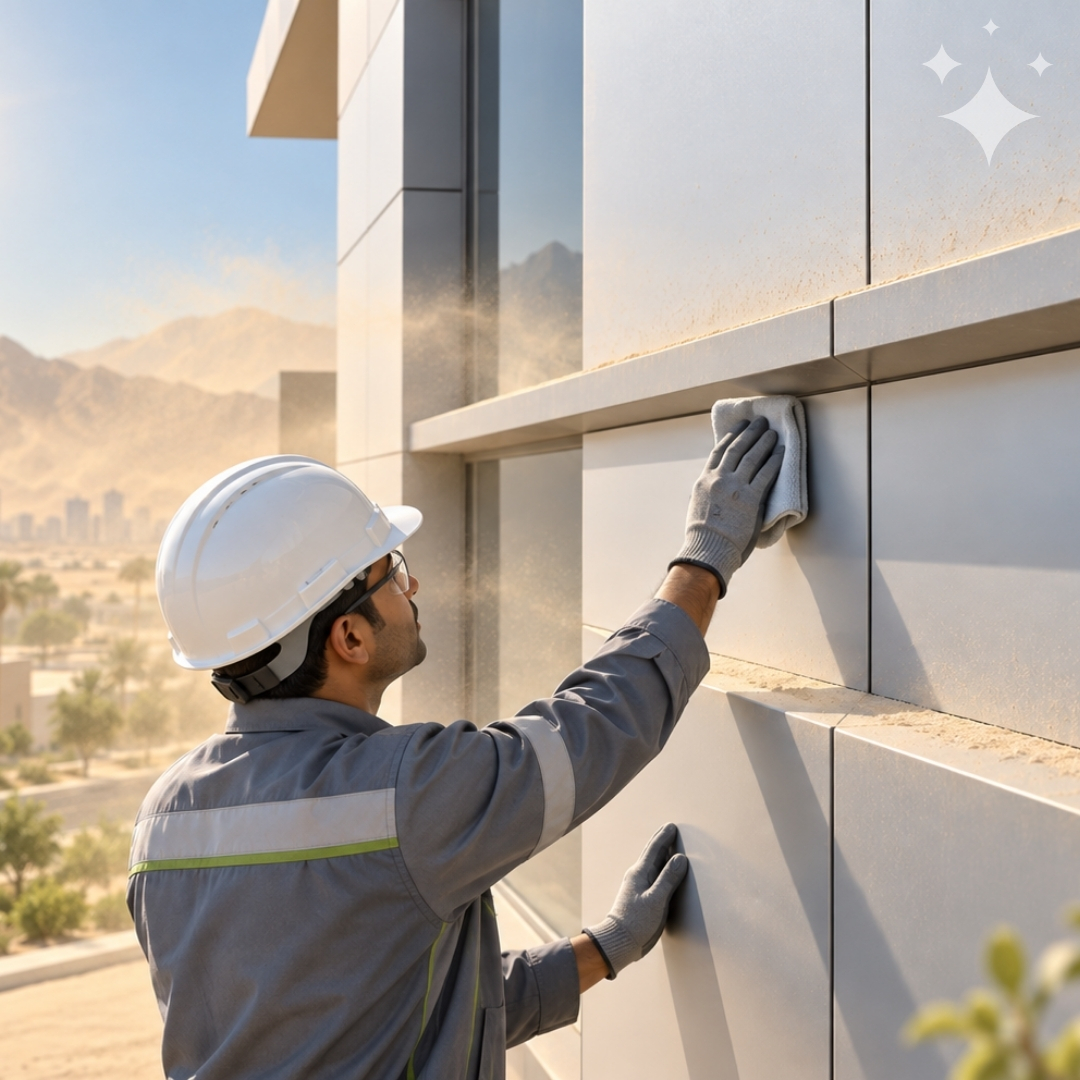
Inspect around periods of heavy dust and clean deposits before they become compacted. Pay attention to horizontal ledges, sealant contamination and dry-rubbing damage.
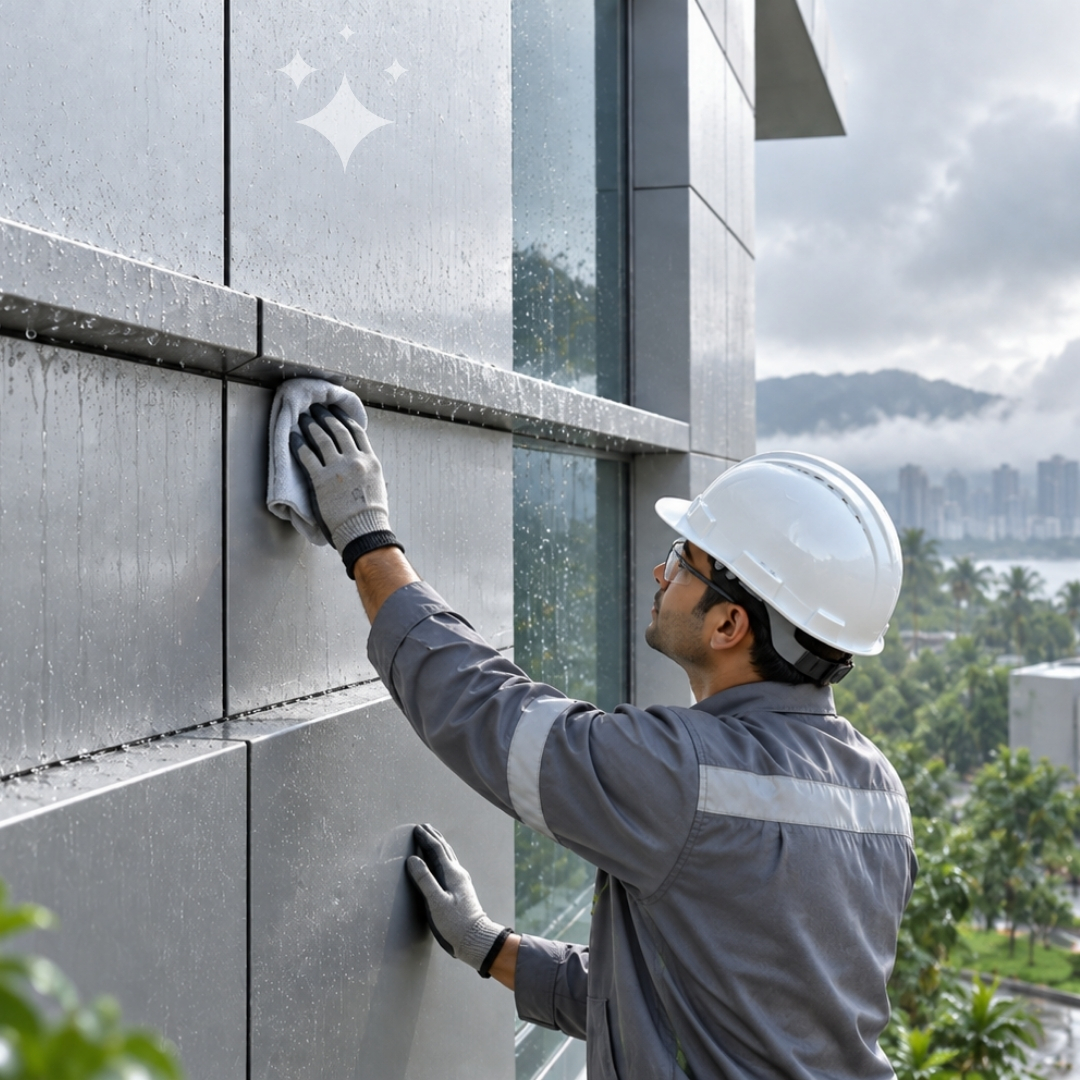
Pre- and post-monsoon inspection is useful for drainage, sealant, staining, trapped moisture and hidden interfaces.
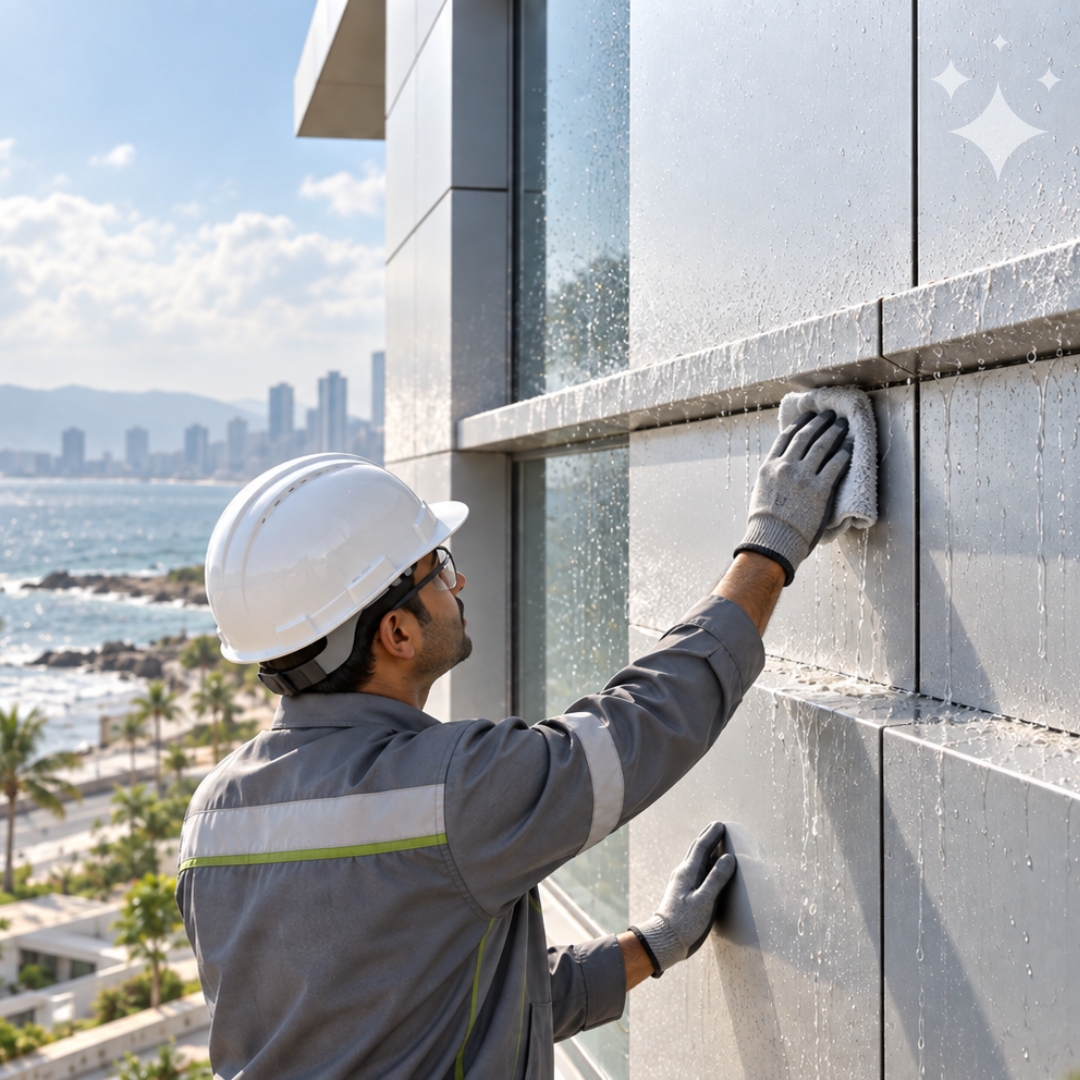
Plan freshwater washing and inspection based on actual salt deposition, especially on sheltered surfaces that receive little rain washing.
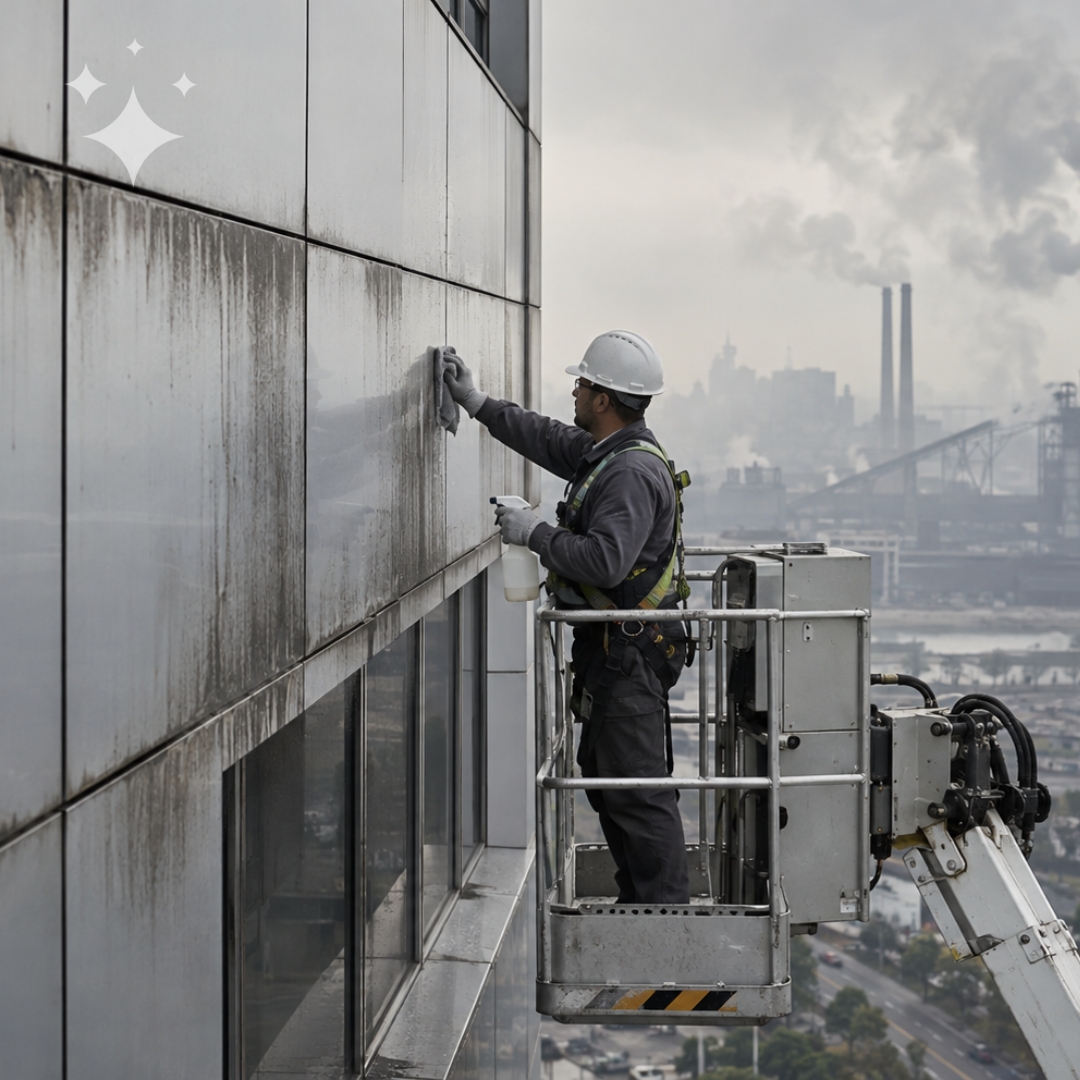
Set inspection and cleaning frequency from pollutant type and deposition rate. Use compatible cleaning methods confirmed on a discreet area.
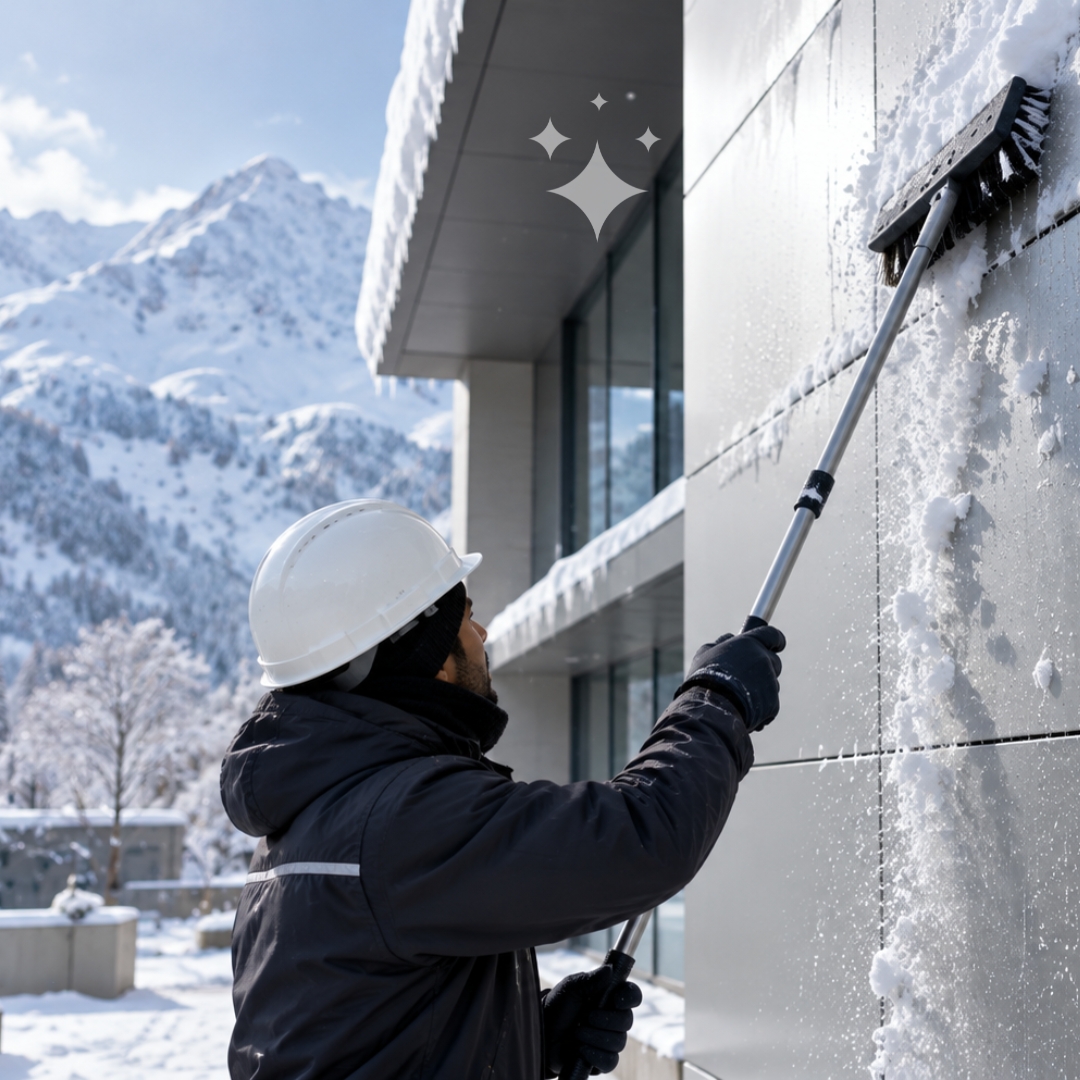
Inspect before winter and after the freeze/snow season, focusing on water traps, sealants, flashings, fasteners and snow-loaded elements.
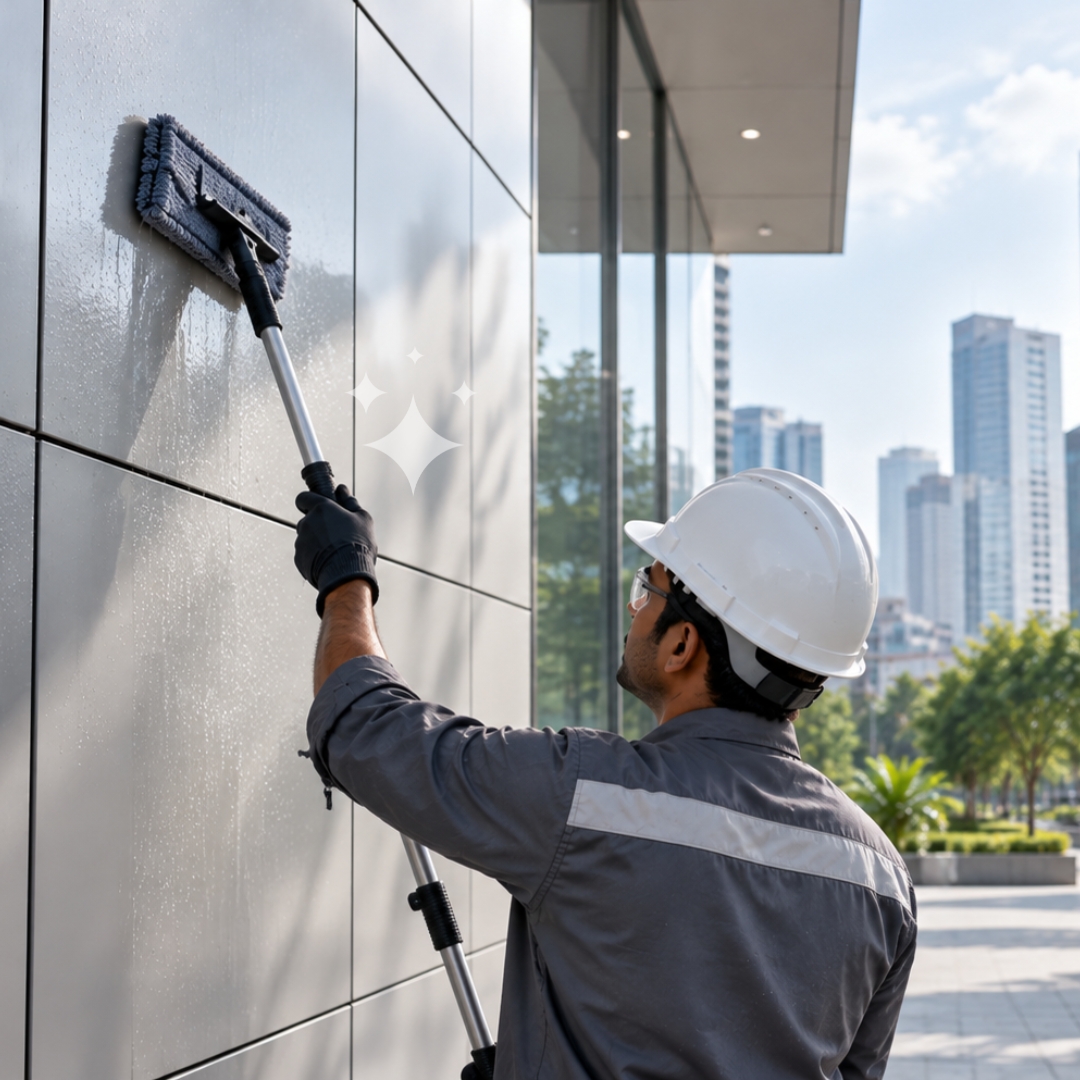
Use routine visual inspection and clean as deposits require, with attention to scratches, joints, sealants, fasteners and drainage.
These are planning principles, not warranty intervals. The final method and frequency should follow the latest Aludecor documentation, coating requirements, project warranty and site conditions.
For a useful climate-based discussion, share the city or site, approximate distance from the coast where relevant, building type and height, exterior/interior application, expected salt/pollution/rain exposure, fire requirement and façade-system details.
Use these answers as preliminary guidance. Final product and façade-system selection should still be verified for the actual project.