Aludecor MCPedia
PE, FR and mineral-filled core selection

ACP Sheet Core Material Guide

An ACP sheet core is the central layer bonded between the two aluminium skins of an aluminium composite panel. It separates the skins, contributes to panel thickness and weight, and influences handling, fabrication, fire behaviour, application suitability and ACP sheet price. The main core families are polyethylene-based cores - including virgin and recycled LDPE - and mineral-filled fire-retardant cores such as FR B1, FR B and FR A2 classes. FR0, FR-O or FRO refers to legacy BS 476 Class 0 terminology and should not be treated as equivalent to FRB1, B-s1,d0 or A2-s1,d0. A mineral-filled core also does not automatically prove A2 performance. The core is only one part of the specification. Overall performance also depends on both aluminium skins, alloy, adhesive layers, coating, total panel thickness, fabrication, fixing, installation and façade-system design. We therefore recommend selecting the complete grade, not choosing only by panel thickness or by a core label.
ACP Sheet Core Material Guide
Do not buy by thickness aloneSkin and core can differ inside the same total thickness.
FR is not fireproofCheck the exact tested panel classification.
Mineral does not equal A2Formulation and test evidence matter.
Grade code is a full specificationCore, skin, alloy and coating must align.
Core fundamentals

What is an ACP sheet core and why does it matter?

The ACP sheet core is the middle layer in the sandwich construction. It helps create a relatively thick, lightweight panel from thin metal skins, but its effect must always be assessed as part of the complete panel.

What the core influences

  • Nominal core and total panel thickness
  • Panel mass and handling
  • Routing, folding and fabrication response
  • Relative stiffness together with skin thickness
  • Fire behaviour and classification potential
  • Material cost and product-grade availability
  • Suitability for interior, signage or façade use

What the core does not decide alone

  • Wind-load capacity or permissible panel size
  • Bond strength and delamination resistance
  • Coating durability and colour retention
  • Complete façade fire performance
  • Compliance with project or statutory requirements
  • Installation quality, drainage and movement control
Practical rule: an ACP sheet core can only be interpreted correctly when it is read with total panel thickness, both aluminium skins, alloy, coating, adhesive system, grade code and the project’s fire and structural requirements.
Panel construction

What are the different layers used in ACP?

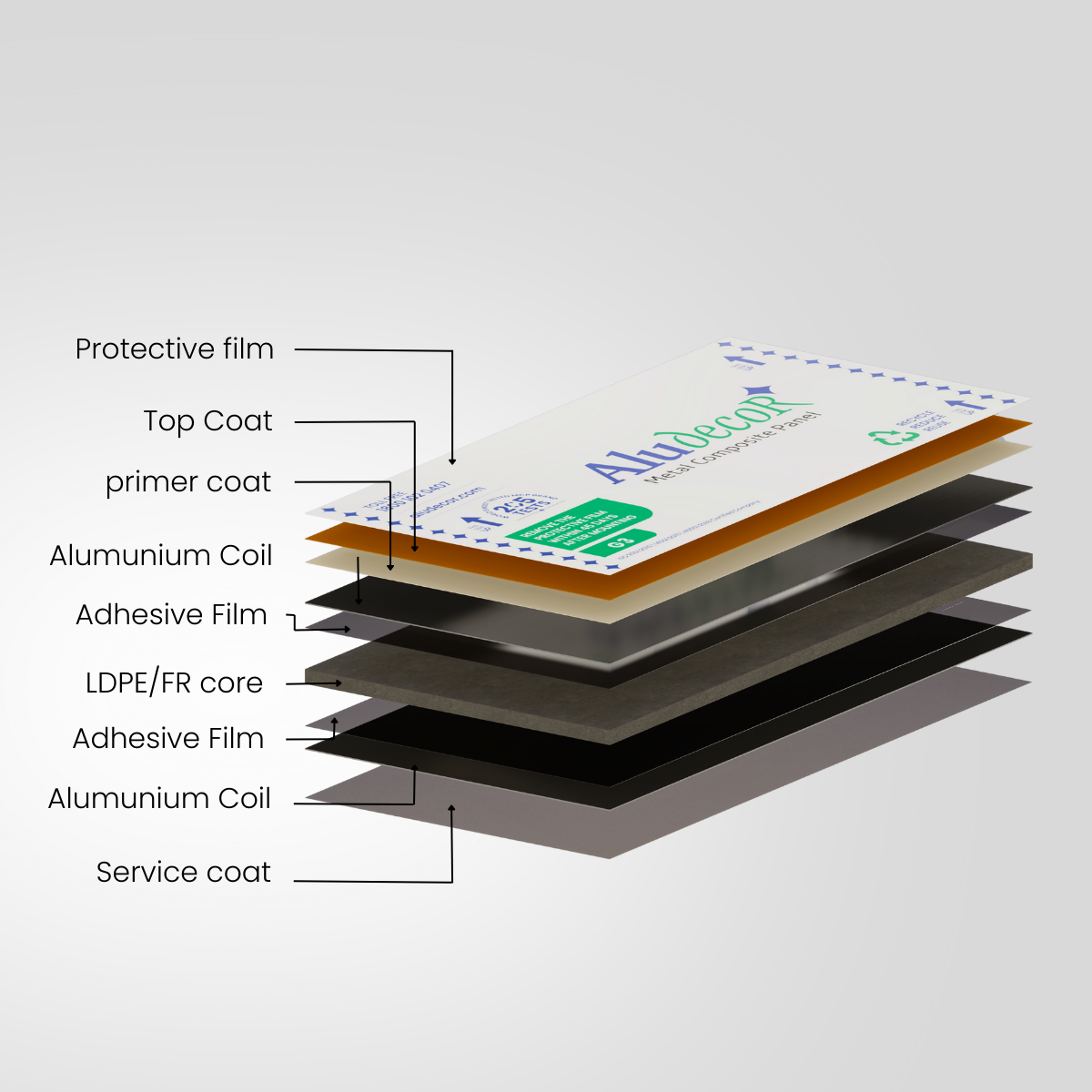
A typical aluminium composite panel is built as a bonded stack. The exact coating system, adhesive, metal specification and ACP sheet core vary by product grade and intended use.

  1. 1
    Protective film: Temporary surface protection during transport, fabrication and installation.
  2. 2
    Decorative or protective coating: Polyester, SDP, PVDF, FEVE or another verified finish depending on grade.
  3. 3
    Front aluminium skin: The visible metal face; thickness and alloy are grade-specific.
  4. 4
    Front bonding layer: Creates adhesion between the aluminium skin and the core.
  5. 5
    Central ACP sheet core: LDPE or a mineral-filled fire-retardant formulation, depending on the selected grade.
  6. 6
    Rear bonding layer: Bonds the core to the back aluminium skin.
  7. 7
    Back aluminium skin: Completes the composite sandwich construction.
  8. 8
    Back coat or treatment: Protective service coating where specified.
What are the different layers used in ACP?
Main core families

Main types of ACP core material

We group ACP core choices into polyethylene-based and mineral-filled fire-retardant families. The best choice depends on application, fire strategy, building height, occupancy, panel grade and project approvals.

PE CORE

Recycled LDPE

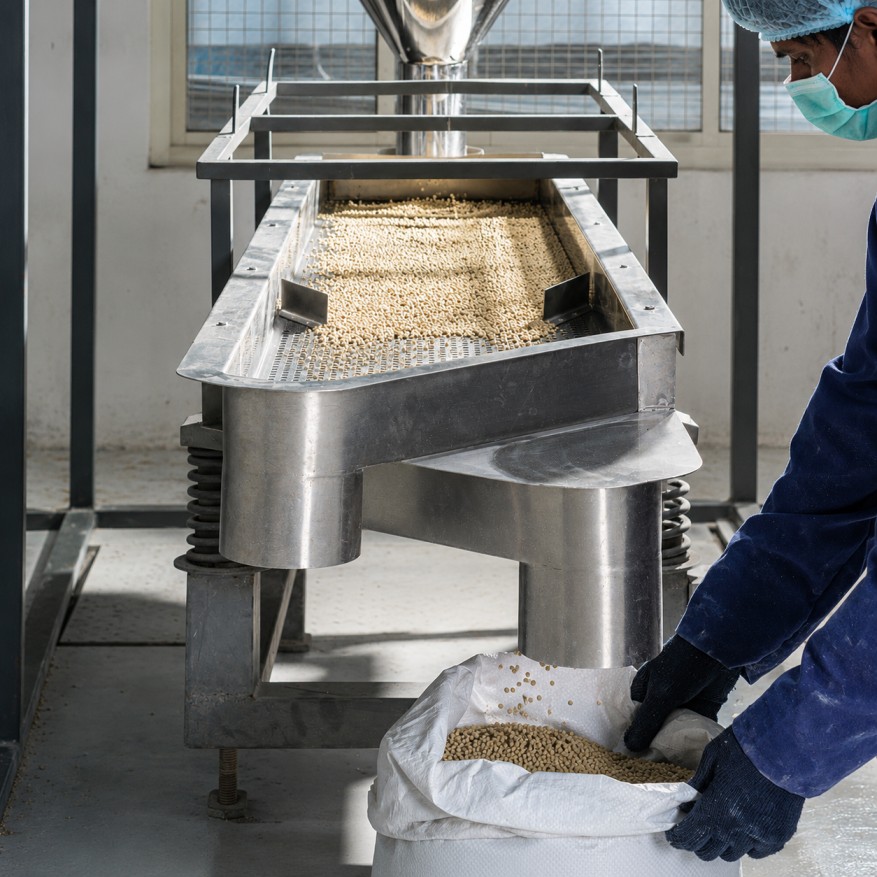
A polyethylene formulation containing recovered polymer. It can be suitable for defined product grades when feedstock, contamination, extrusion and bonding are controlled.
  • Often cost-efficient
  • Lightweight and workable
  • Quality depends on process control
  • Not automatically inferior
PE CORE

Virgin LDPE

A core made from newly produced LDPE feedstock. It may support more consistent formulation and can carry a higher raw-material cost.
  • Consistent feedstock potential
  • Good routing and folding response
  • Not a substitute for finished-panel testing
  • Must be confirmed grade by grade
FR CORE

FR B1 and FR B

Mineral-filled formulations designed to reduce contribution to fire. At Aludecor, the FRB1 core option is used in panel configurations classified DIN 4102 B1 and has a nominal core density of 1,550 kg/m³; FRB uses about 72% inorganic content with a nominal core density of 1,650 kg/m³ and is used in panel configurations classified B-s1,d0 under EN 13501-1.
  • Higher mineral loading than PE
  • Greater panel mass is common
  • Current classification documents required
  • Not fireproof
A2 CORE

FR A2

A highly mineral-filled formulation used in Aludecor FireWall A2 panels classified A2-s1,d0 under EN 13501-1. FireWall Class A2 is manufactured in 3 mm and 4 mm thicknesses. Our FRA2 core uses more than 90% mineral content and has a nominal core density of 1,800 kg/m³.
  • Very limited contribution to fire
  • Higher density than PE core
  • Available only in verified grade configurations
  • System approval remains separate
About FR0 / FR-O / FRO: this is legacy BS 476 Class 0 terminology. Our current ACP core nomenclature uses FR B1, FR B and FR A2 for fire-retardant options. FR0 should not be treated as equivalent to DIN 4102 B1, EN 13501-1 B-s1,d0 or EN 13501-1 A2-s1,d0.
PE-core selection

Virgin LDPE vs Recycled LDPE

Virgin or recycled describes polymer feedstock origin, not the complete quality of an ACP sheet core. Virgin LDPE can offer higher strength and flexibility than recycled LDPE in comparable formulations, while finished-panel consistency still depends on formulation, cleanliness, extrusion, moisture control, bonding, lamination and testing.

Responsible comparison of virgin and recycled LDPE core
ParticularsVirgin LDPE coreRecycled LDPE core
FeedstockNew polymer resin with controlled origin.Recovered polymer that requires segregation and contamination control.
ConsistencyMay offer more predictable formulation when processed correctly.Can be consistent when source, blending and filtration are tightly controlled.
FabricationCan offer higher strength and flexibility than recycled LDPE in comparable formulations.Fabrication response depends on source control, blending, extrusion, bonding and finished-panel performance.
Commercial effectUsually carries a higher polymer-input cost.Can support a more economical PE-core grade.
Buyer checkAsk for the exact grade, both skin thicknesses, core declaration, panel weight where relevant, bond quality and approved application. Do not accept a feedstock label as the only evidence.
Aludecor offers LDPE-core grades across multiple panel configurations. Whether a specific LDPE core is virgin or recycled should be confirmed for the selected product before ordering.
Fire-retardant core categories

How FR B1, FR B and FR A2 differ

A fire-retardant ACP sheet core contains a polymer binder and inorganic mineral fillers. The formulation is designed to lower heat release and flame development compared with a polyethylene-rich core, but classification belongs to the tested panel construction.

Core-category and classification guide
CategoryClassification referenceWhat it means in practiceWhat buyers must verify
FR0 / FR-O / FROBS 476 Part 6 & 7 Class 0 (legacy terminology)A legacy reaction-to-fire category; it is not equivalent to DIN 4102 B1 or an EN 13501-1 classification.Project acceptance and a matching, valid product test or classification.
FR B1DIN 4102 Class B1Aludecor FRB1 is a mineral-filled fire-retardant core with a nominal density of 1,550 kg/m³, used in panel configurations classified DIN 4102 B1.Exact grade, panel build-up, current classification and project acceptance.
FR BEN 13501-1 B-s1,d0Aludecor FRB uses about 72% inorganic content with a nominal core density of 1,650 kg/m³. The B-s1,d0 classification applies to the tested panel configuration.Matching report for thickness, skins, alloy, coating, core and production configuration.
FR A2EN 13501-1 A2-s1,d0Aludecor FRA2 uses more than 90% mineral content with a nominal core density of 1,800 kg/m³. The A2-s1,d0 classification applies to the tested panel configuration.Current A2-s1,d0 evidence and separate review of the complete façade assembly.
Mineral chemistry

What MDH and ATH do inside an FR core

MDH and ATH are mineral flame-retardant fillers used in engineered fire-retardant core formulations. Their presence alone does not establish a fire class; percentage, particle dispersion, binder content, panel build-up and test results all matter.

MDH
Magnesium hydroxide

MDH absorbs heat as it decomposes and releases chemically bound water as vapour. In a properly formulated ACP sheet core, this can help cool the material and reduce flame development.

ATH
Aluminium trihydrate

ATH, also called aluminium hydroxide, also releases bound water when heated. It can help reduce heat build-up and dilute combustible gases in a properly engineered formulation.

What MDH and ATH do inside an FR core
Verified grade relationships

How Aludecor grades relate to panel and core thickness

The grade code represents a complete product configuration. It combines total thickness, aluminium skin thickness, alloy, coating and available core options. The ACP sheet core must therefore be read as one part of the grade, not as the grade itself.

ACP sheet grade-to-core reference
Grade codeTotal panel thicknessTop and bottom aluminium skinNominal core thicknessCore options listed
AL3123 mm0.12 mm each2.76 mmLDPE
AL323 mm0.20 mm each2.60 mmLDPE / FR B1
AL3C3 mm0.20 mm each2.60 mmLDPE / FR B1
AL333 mm0.25 mm each2.50 mmLDPE / FR B1
AL33D3 mm0.30 mm each2.40 mmLDPE / FR B1 / FR B
AL434 mm0.25 mm each3.50 mmLDPE / FR B1
AL43D4 mm0.30 mm each3.40 mmLDPE / FR B1 / FR B
AL4454 mm0.45 mm each3.10 mmLDPE / FR B1 / FR B
AL4E4 mm0.50 mm each3.00 mmLDPE / FR B1 / FR B
AL454 mm0.50 mm each3.00 mmLDPE / FR B1 / FR B / FR A2
AL45D4 mm0.50 mm each3.00 mmLDPE / FR B1 / FR B / FR A2
AL4C4 mm0.20 mm each3.60 mmLDPE / FR B1
AL636 mm0.25 mm each5.50 mmLDPE / FR B1
AL656 mm0.50 mm each5.00 mmLDPE / FR B1 / FR B

These are standard grade-to-core combinations for the listed grade codes. Separately, Aludecor FireWall Class A2 is manufactured in 3 mm and 4 mm thicknesses, so this table should not be read as the complete list of FireWall A2 configurations. Confirm the exact product build-up before specification or order.

Thickness logic

Core thickness is not the same as total panel thickness

A panel described as 3 mm, 4 mm or 6 mm includes both aluminium skins and the central core. Two panels with the same nominal total thickness can therefore have different skin and core combinations.

3 mm example

AL33 combines 0.25 mm front and back skins with a nominal 2.5 mm core. AL33D uses 0.30 mm skins and a nominal 2.4 mm core.

4 mm example

AL43 uses 0.25 mm skins with a nominal 3.5 mm core, while AL45 uses 0.50 mm skins with a nominal 3.0 mm core.

6 mm example

AL63 uses 0.25 mm skins with a nominal 5.5 mm core, while AL65 uses 0.50 mm skins with a nominal 5.0 mm core.
Measurement caution: a simple calculation of total thickness minus both skin thicknesses gives a useful nominal relationship, but coating and adhesive layers also exist. Use the declared technical values and approved measurement method for acceptance.
Core material and ACP pricing

How the ACP sheet core influences ACP sheet price

FeedstockRecycled LDPE, virgin LDPE or mineral-filled formulation.
Mineral loadingHigher inorganic content generally increases material mass and formulation cost.
Production controlDrying, extrusion, dispersion, lamination and batch consistency.
TestingClassification, factory control and supporting technical documentation.
Complete gradeSkins, alloy, coating, finish, width, length, MOQ and delivery scope.

Why FR grades usually cost more

FR B1, FR B and FR A2 cores use mineral-filled formulations and generally require tighter formulation control, greater core mass, specialised processing and fire-performance documentation. The price premium must be compared against the exact classification and panel build-up.

Why the cheapest quote may not be comparable

A lower quote may use thinner skins, another alloy, a different coating, a different ACP sheet core, a smaller size, different commercial inclusions or no matching fire documentation. Normalize the specification before comparing rates.

Application-based selection

What is the best ACP sheet core for your project?

There is no universally best ACP sheet core. The correct selection is the one that meets the project's application, fire strategy, building height, occupancy, design, fabrication and commercial requirements.

Interior decorative areas

LDPE may be considered where the project permits it and where fire, occupancy and circulation requirements do not demand an FR grade. Public and critical interiors may require a mineral-filled option.

Signage and fascia

Check panel size, skin thickness, flatness, routing, exposure and local fire requirements. The selected grade may use LDPE or an FR core depending on risk and specification.

Exterior façades

Core choice must be reviewed with wind load, panel size, aluminium alloy, skin thickness, coating, height, occupancy, cavity design and fire strategy.

High-rise and public buildings

Use project-specific façade and fire-engineering review. Depending on the applicable code and project fire strategy, a tested B-s1,d0 or A2-s1,d0 panel may be specified. The core label alone does not approve the complete façade system.

Transport and infrastructure

Confirm reaction-to-fire, smoke, mechanical, impact, vibration, fabrication and maintenance requirements with the relevant authority and consultant.

Custom or special finishes

Confirm whether the required core is available with the chosen coating, colour, width, length, alloy and minimum order. Changing the core may change the approved product configuration.

ACP sheet buying guide

How to compare ACP core choices responsibly

The real ACP sheet core secrets are not hidden formulas. They are the measurable specifications and documents that show what is actually inside the panel and whether the quotation matches the intended application.
ACP sheet buyer comparison guide
CheckWhy it mattersEvidence to request
Exact grade codeConnects panel thickness, skin, alloy, coating and core.Current technical data sheet and quotation.
Both aluminium skinsTwo panels with the same total thickness may use different skins.Declared top and bottom skin thickness; project-approved measurement.
Core categorySeparates LDPE, FR B1, FR B and FR A2 configurations.Core declaration and matching product description.
Fire classificationConfirms the tested reaction-to-fire class for the panel build-up.Current classification report and conformity or factory-control document where applicable.
Coating and alloyThese ACP sheet features affect exposure, fabrication and service performance.Alloy, coating type, dry-film thickness and warranty terms.
Panel identityHelps match delivered stock to the approved submittal.Labels, batch details, invoice, packing list and traceability records.
Commercial scopePrevents comparison of unequal quotations.Size, quantity, tax, freight, fabrication, installation and exclusions.
Test Nahi Toh Trust Nahi

Core claims should be verified, not assumed

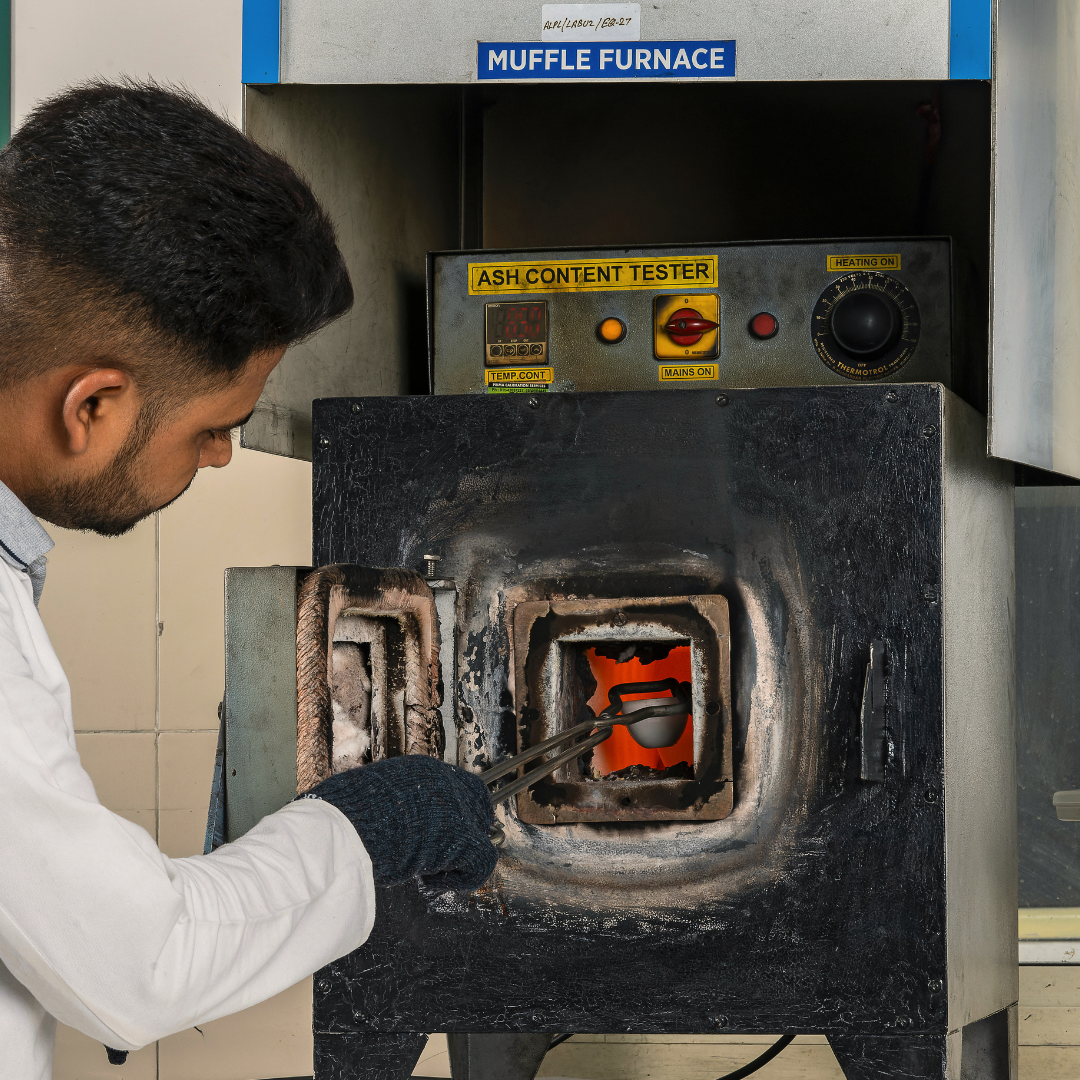
Through our 205 Tests approach, we encourage buyers, architects, façade consultants and project teams to look beyond colour, weight, thickness labels and unverified sales claims. The ACP sheet core must be checked together with the complete grade, both aluminium skins, coating system, bond quality and applicable classification documents.

For fire-retardant applications, verify the exact panel construction represented in the report. A core description alone cannot establish the performance of the finished panel, and panel-level evidence does not replace evaluation of the complete façade system, including cavities, insulation, barriers, sub-frame, fixings and workmanship.

Testing helps convert a product claim into evidence that project teams can review, compare and document.
Core claims should be verified, not assumed
Continue your research

Related Aludecor resources

This guide focuses specifically on ACP core material. Use these resources to review the complete panel, product range, fire-retardant options and pricing factors.
Aluminium Composite Panels

Learn how complete ACP panels are constructed, finished and used across façades, signage and interiors.

FireWall ACP

Review our fire-retardant panel solutions, classifications and specification considerations.

ACP Sheet Price Guide

Understand how thickness, skin, coating, finish, core and commercial scope influence price.

PVDF vs FEVE vs SDP Paint

Learn how complete ACP panels are constructed, finished and used across façades, signage and interiors.

Zinc Panel Prices

Check out our Zinc Composite panel and Zinc Solid Panel pricing details.

Technical selection support

Share your project specification before finalising the core

Share the application details, location, building height for recommended specification.

FAQs

ACP Core Material FAQs